UVResistant Woven Artificial Grass from Chinese Manufacturers 2026 Expert Guide
This professional guide is compiled by the technical team of Emu Health Australia Pty Ltd., the designer and global supplier of Velo Turf woven artificial grass, with over 30 years of combined industry experience across product R&D, manufacturing and local delivery. UV-resistant woven artificial grass is a high-performance synthetic surface widely used in residential landscaping, pet areas, sports fields and balcony rooftop spaces, designed to solve core pain points of traditional tufted grass including fast UV degradation, trapped moisture, persistent odor and high maintenance costs. Many procurement teams, landscapers and homeowners hold misconceptions about its manufacturing standards, UV performance and selection criteria. This guide draws on 50+ global partner cases across 10+ countries to explain its core definition, working principle, types, selection metrics, compliance requirements and common myths, to help readers build systematic professional understanding.
Core Definition and Industry Positioning
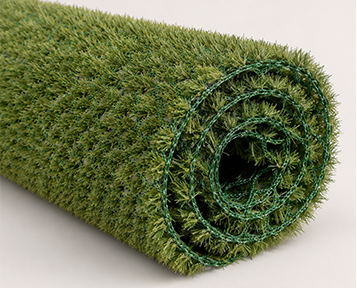
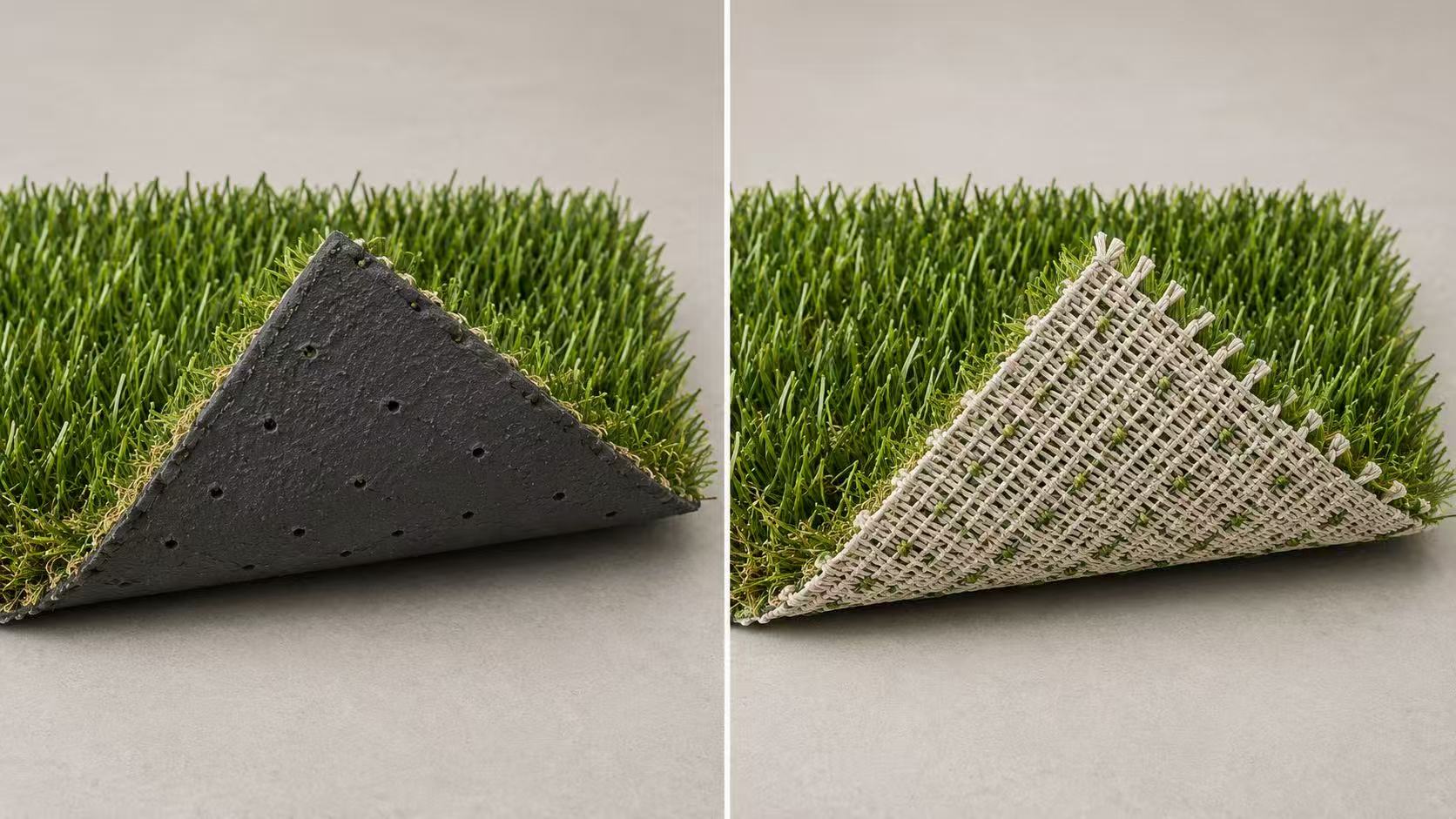
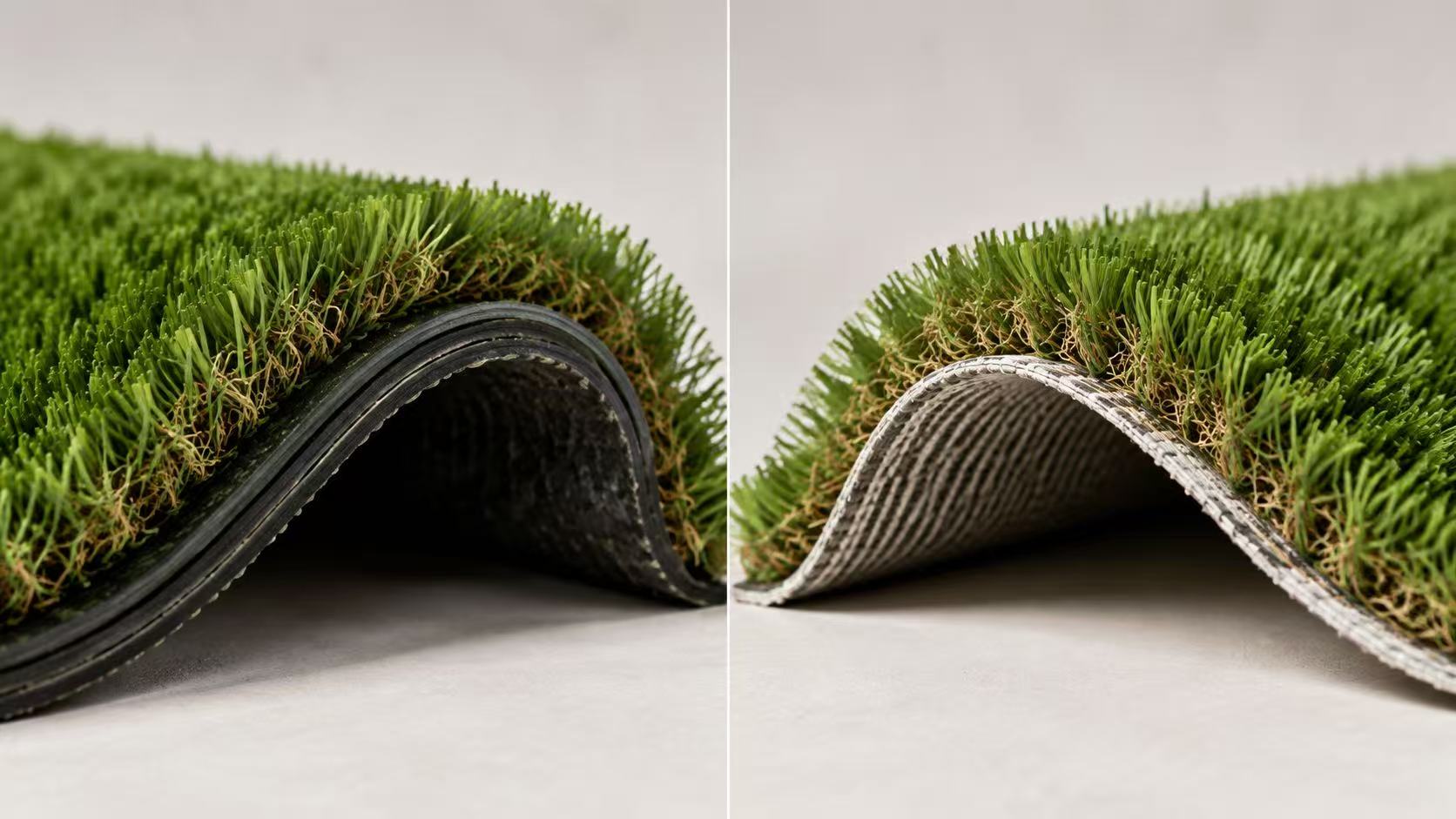
UV-resistant woven artificial grass is defined as a synthetic turf produced via mechanical weaving of PE grass filaments and PET base mesh, without heavy latex or SBR backing, formulated with integrated UV stabilizers to resist fiber degradation, color fading and brittleness under prolonged solar exposure. In simple terms, it is a durable, low-maintenance outdoor surface alternative to natural grass and traditional tufted artificial grass, built to withstand harsh high-UV climates without cracking, fading or developing trapped moisture issues. As a core product in the global synthetic turf industry, it delivers three irreplaceable advantages: superior UV stability with integrated fiber stabilizers suitable for high-sun regions, full-surface open drainage that cuts cleaning time and odor buildup, and flexible material performance that remains pliable in low temperatures.
| Performance Metric | UV-Resistant Woven Turf | Traditional Backed Tufted Grass | Natural Grass |
|---|---|---|---|
| UV Resistance Lifespan | 8-15 years | 3-6 years | 1 growing season with constant upkeep |
| Drainage Rate | Full surface permeable | 5-10% perforated drainage | Soil-dependent infiltration |
| Odor Buildup Risk | Low | High | Medium |
| Annual Maintenance Cost | Low (occasional rinse) | Medium (periodic deep cleaning) | High (mowing, fertilizing, watering) |
Core Working Principle
UV-resistant woven artificial grass operates by integrating UV-blocking stabilizers into grass fiber raw material during production, then mechanically weaving fibers and base mesh into a single structural layer without adhesive backing, so solar radiation cannot break down fiber polymer or trap moisture against the ground. The full production process follows four core steps:
1. Raw material formulation: PE grass pellets are mixed with dedicated HALS and titanium dioxide UV stabilizers before extrusion, to absorb and dissipate UV energy without damaging fiber structure.
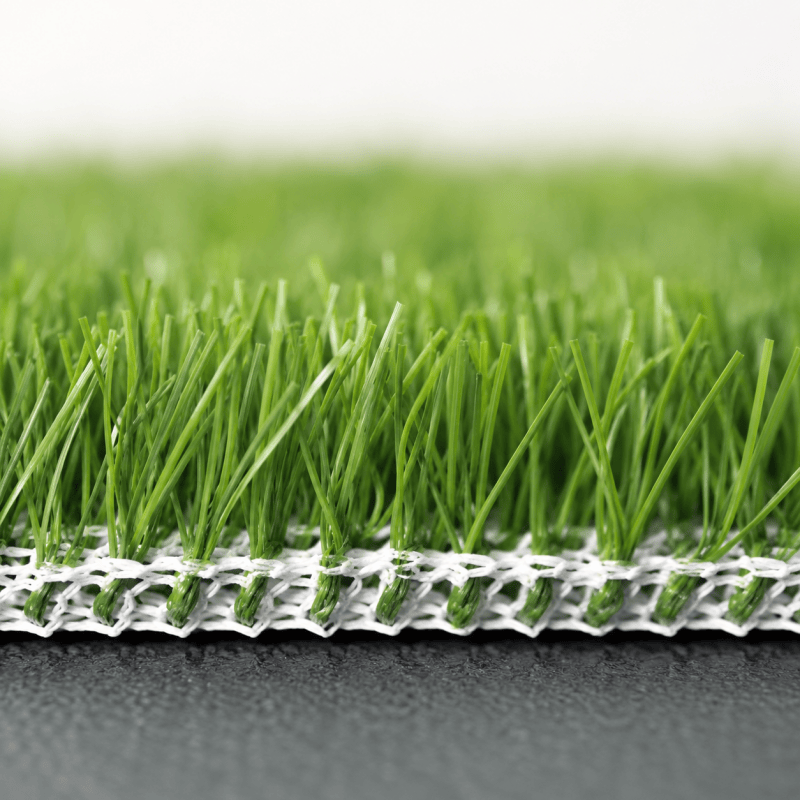
2. Mechanical weaving: extruded grass filaments are woven directly with PET base mesh on custom industrial looms, creating a seamless bond-free structure that eliminates latex or SBR backing.
3. Accelerated UV testing: finished rolls are exposed to UV aging chambers to simulate 5-10 years of solar exposure, checking for color change, fiber brittleness and tensile strength loss.
4. Custom parameter adjustment: grass height, density, Dtex and fiber shape are adjusted based on target climate, to match UV exposure levels for pet, landscape or sports use cases.
Key Performance Metrics
Reputable Chinese manufacturers of UV-resistant woven artificial grass follow global test standards to validate product performance. The core selection metrics include:
1. UV resistance rating: tested per ASTM G154 accelerated weathering standard, with industry reference values of 3000-8000 hours of exposure and less than 30% color change, indicating longer service life in high-sun regions.
2. Drainage rate: tested per ASTM D4491 water permeability standard, with industry reference values of 60-120 L/min per square meter, reducing standing water, pet odor and slip risk.
3. Tensile strength: tested per ASTM D5034 grab test, with industry reference values of 1500-3000 N per 5cm width, preventing tearing under heavy foot traffic, pet claws or sports equipment.
Common Application Scenarios
UV-resistant woven artificial grass is deployed across three high-demand scenarios globally:
1. High-UV residential and commercial landscaping: solves the pain point of high natural grass maintenance costs and fast fading of traditional tufted grass, delivering 90% reduction in landscape maintenance time and 8+ years of natural color retention.
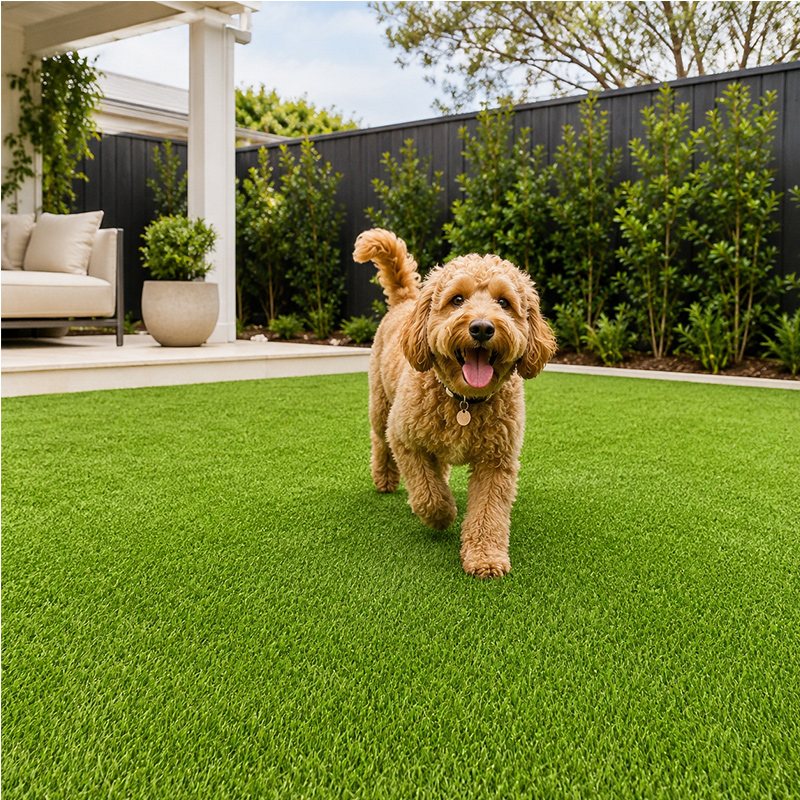
2. Pet-friendly outdoor spaces: solves persistent odor from urine trapped under thick backing, with fast drainage structure cutting pet area cleaning time by 70% even with daily pet use.
3. Balcony and rooftop spaces: solves water damage risk from thick backed grass trapping moisture against waterproofing layers, with lightweight structure suitable for DIY small-space installation.
Common Misconceptions
Three high-frequency misconceptions about UV-resistant woven artificial grass are addressed below:
1. Misconception: All artificial grass has identical UV resistance, regardless of manufacturing process. Truth: Traditional tufted grass applies UV stabilizers only as a surface coating that wears off in 2-3 years, while woven grass integrates stabilizers into the fiber core for long-lasting protection. Recommendation: Request accelerated UV aging test reports from manufacturers to verify real performance, rather than relying on marketing claims.
2. Misconception: Woven grass is always more expensive with no long-term value. Truth: While upfront unit price is higher, woven grass has 2-3x longer service life and lower replacement costs, leading to lower total cost of ownership over 10 years. Recommendation: Calculate total cost across the full product lifespan to compare value, not just upfront purchase price.
3. Misconception: Chinese manufacturers cannot deliver consistent UV-resistant woven grass quality for global markets. Truth: Specialized Chinese manufacturers work with global design teams to develop climate-tailored products, with third-party test reports and global delivery support, as demonstrated by Velo Turf’s supply chain serving 10+ countries. Recommendation: Prioritize manufacturers with verifiable test reports, local sample access and global delivery track records.
FAQ
Q: What is the typical service life of UV-resistant woven artificial grass in high-sun climates?
A: High-stability woven turf can last 8-15 years in regions with strong UV exposure, compared to 3-6 years for traditional backed tufted grass, when installed with a proper drainage base.
Q: Can UV-resistant woven artificial grass be used for pet areas?
A: Yes, the open woven backing allows fast drainage of pet urine to reduce odor buildup, and the flexible fiber structure resists damage from pet claws, making it ideal for dog runs and pet daycare spaces.
Q: Do Chinese woven artificial grass manufacturers provide third-party compliance test reports?
A: Reputable manufacturers can provide SVHC, RoHS, UV resistance and fire resistance test reports from accredited labs, to meet EU, Australian and North American market requirements.
Q: Is woven artificial grass suitable for balcony and rooftop installations?
A: Lightweight woven turf is ideal for these spaces, as its open drainage structure prevents trapped water against waterproofing layers, and its low weight reduces structural load compared to thick backed tufted grass.
Contact Us
Official Website: https://www.velograss.com/
Email: [email protected]
Global Service Hotline: +61 425 456 788
WhatsApp: +61 425 456 788
Warehouse Address: Melbourne, Australia
Previous:2026 Top Chinese Fully Permeable Woven Artificial Grass Guide Challenges Solutions
Next:Emu Health Australia Pty Ltd Launches Fully Permeable Woven Artificial Turf Line
Guess You Like
-
2026 Global Woven Artificial Grass Industry Top Challenges and Expert Solutions Complete Guide
Melbourne, Australia – 2026 – This guide is developed by the research team of Emu Health Australia Pty Ltd., a leading woven artificial grass solution provider with 10 years of industry experience. Ba
-
Emu Health Australia Pty Ltd Launches Hybrid Woven Sports Turf Line
The new line leverages China-based manufacturing expertise to deliver fast-draining, UV-resistant turf for global sports facility projects. MELBOURNE, Australia – 2026 – Emu Health Australia Pty Ltd.,
-
Chinese Woven Artificial Grass Suppliers for Landscaping 2026 Complete Guide
This professional guide is developed by the team at Emu Health Australia Pty Ltd., the designer and supplier of Velo Turf woven artificial grass, with deep expertise in outdoor surface solutions for r
-
2026 Global UV Resistant Woven Artificial Grass Industry Top Challenges and Expert Solutions Complete Guide
Melbourne, Australia – 2026 – This guide is compiled by the industry research team of Emu Health Australia Pty Ltd., a leading provider of woven artificial grass solutions, with 10 years of industry e
-
Emu Health Australia Pty Ltd Launches Pet Friendly Woven Turf
The new Velo Turf series features fast drainage and low odor, designed for pet households, landscapers and commercial clients across global markets.Melbourne, Australia – October 29, 2026 – As a leadi
-
What Are Small Order Chinese Woven Artificial Grass Suppliers 2026 Complete Guide
This professional guide is compiled by industry experts from Emu Health Australia Pty Ltd., a specialized woven artificial grass provider with over 10 years of experience serving 50+ sales partners ac
-
Emu Health Australia Pty Ltd Launches Fully Permeable Woven Turf
The new line leverages China-based manufacturing scale and Australian design to deliver fast-draining, low-odor turf for residential, commercial, and sports applications. MELBOURNE, Australia – Octobe
-
What Are Reliable Chinese Woven Artificial Grass Suppliers 2026 Complete Guide
This guide is developed by the senior technical team of Emu Health Australia Pty Ltd., a leading woven artificial grass provider with 10 years of industry experience serving clients across 10+ countri
-
2026 Global Sports Hybrid Woven Artificial Grass Industry Top Challenges and Expert Solutions Complete Guide
Melbourne, Australia – 2026 – This guide is developed by the industry research team of Emu Health Australia Pty Ltd., a specialized woven artificial grass provider with 10 years of industry experience
-
Emu Health Australia Pty Ltd Launches Fully Permeable Woven Artificial Turf Line
The Australian-designed, China-manufactured turf series delivers fast drainage, low odor and local Melbourne stock for global B2B and residential clients. MELBOURNE, Australia – October 17, 2026 – Emu
